
eBooks
100 Books found- Featured
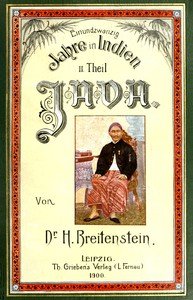
21 Jahre in Indien. Zweiter Theil: Java. by Heinrich Breitenstein
Authors: Breitenstein, Heinrich, 1848-1930
Hey, I just finished this wild travel memoir from the 1800s, and you have to hear about it. Imagine a German doctor, Heinrich Breitenstein, landing in Java in the 1880s. He's not a tourist or a colonial official in a cushy job—he's a working doctor thrown right into the middle of a society in massive upheaval. The Dutch are in charge, but the whole island is simmering with tension. The book isn't just about temples and tigers (though there are plenty of those). It's about the daily, messy reality of colonialism from someone who was both part of the system and a sharp observer of its flaws. He treats everyone, from Dutch planters to Javanese villagers, and his stories are full of bizarre medical cases, cultural clashes, and moments of real human connection. The main thing that hooked me was the conflict he lived in: a European trying to help, but working within a framework of control that often caused the problems he was trying to fix. It's like a time capsule, but with a conscience. If you like real adventure stories that make you think, this is a hidden gem.
- Featured
Printers' Marks: A Chapter in the History of Typography by W. Roberts
Authors: Roberts, W. (William), 1862-1940
Hey, have you ever flipped to the copyright page of an old book and noticed that little symbol, like a family crest for the printer? I just read this fascinating book about those symbols, called printers' marks. It turns out, they're not just decoration. For centuries, printers used them like signatures and battle flags. This book is basically a detective story about tracking down these hidden symbols and figuring out what they meant. Who stole whose design? Why did that printer choose a turtle or a unicorn? It's a hidden history of rivalry, pride, and artistry, all hiding in plain sight on the title pages of books we might otherwise just skim past. It completely changed how I look at my old books.
- Featured
Romulus by Jacob Abbott
Authors: Abbott, Jacob, 1803-1879
Hey, I just finished this little gem called 'Romulus' by Jacob Abbott, and it’s way more interesting than I expected. You know the basic legend—the twins, the she-wolf, founding Rome—but Abbott makes it feel fresh. He doesn't just tell you a dusty myth; he walks you through the whole messy, violent, and kind of unbelievable story as if it were real history. The main question he tackles is: how does a baby left to die in the wilderness end up building one of the greatest empires ever? The book really digs into that transformation, from the miraculous survival to the brutal clash with his own brother, Remus. It’s a story about ambition, family betrayal, and the raw beginnings of power. If you’ve ever wondered about the real person (or the legend) behind the city’s name, this short read connects the dots in a really engaging way. It’s like a foundational myth with all the drama left in.
- Featured

The Book of Three Hundred Anecdotes by Various
Authors: Various
Hey, have you heard about that old book that's basically a literary time capsule? It's called 'The Book of Three Hundred Anecdotes.' Forget dry history books. This is a collection of three hundred short, true stories from the 19th century, gathered from all sorts of places. It's not one narrative, but hundreds of little windows into another world. You'll meet a famous actor who gets upstaged by a dog, a general who wins a battle with a clever trick, and a scientist who makes a discovery by complete accident. The main 'conflict' is just life itself—ambition, pride, luck, and human folly playing out in bite-sized pieces. It's the perfect book to keep on your nightstand. Read one story and get a glimpse of Victorian gossip, drama, and wisdom. It's surprisingly addictive.
- Featured

Les mystères de Paris, Tome V by Eugène Sue
Authors: Sue, Eugène, 1804-1857
Okay, I need to tell you about this wild ride of a book I just finished. It's the fifth volume of 'Les Mystères de Paris,' and if you think you've seen everything in this series, think again. This is where all the simmering plots from the earlier books come to a furious boil. We're talking about Rodolphe, our mysterious do-gooder, finally closing in on the villains who have made the city's underworld their playground. The stakes feel incredibly personal now. It's not just about solving a crime; it's about justice for characters you've grown to care about over thousands of pages. The tension between the glittering high society and the brutal slums is cranked up to maximum. Sue throws in some truly shocking twists that will make you gasp. If you've been following the series, this volume is the payoff you've been waiting for—it’s packed with confrontations, reveals, and emotional gut-punches. If you haven't started yet, this is your sign to dive into the whole epic. It’s a masterclass in keeping a reader glued to the page.
- Featured

Récits d'une tante (Vol. 2 de 4) by Boigne
Authors: Boigne, Louise-Eléonore-Charlotte-Adélaide d'Osmond, comtesse de, 1781-1866
Okay, picture this: It's post-revolution France, everyone is trying to figure out where they stand. We follow the Countess de Boigne, a sharp, well-connected woman who watched the old world crumble and is now navigating the new one. This isn't a dry history book. It's her personal diary of power. She's in the room where it happens—at royal courts, in political backrooms, at glittering salons—and she's telling us everything. The real story here isn't just about kings and battles; it's about the quiet conversations, the subtle insults, the marriage alliances, and the sheer scramble for survival and status in a society that's been turned upside down. If you love behind-the-scenes gossip from the most dramatic periods in history, told by someone who was actually there, this is your next read. It feels like finding a secret letter that explains how the world really works.
- Featured
Progress and Poverty, Volumes I and II by Henry George
Authors: George, Henry, 1839-1897
Ever wonder why we have both incredible wealth and deep poverty side by side? Henry George asked that exact question in 1879, and his answer is still shaking things up today. Forget dry economics—this book reads like a detective story about society's biggest mystery. George looks at booming cities and struggling families and asks: 'If we're getting richer as a nation, why are so many people getting left behind?' He points a finger at something surprising—land ownership—and proposes a radical fix that would make taxes work completely differently. Whether you agree with his solution or not, the question he raises will stick with you long after you finish. It's that rare book that doesn't just explain the world but challenges you to imagine a better one.
- Featured
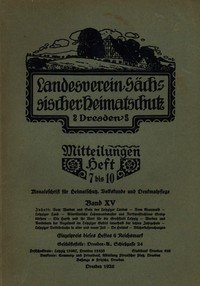
Landesverein Sächsischer Heimatschutz — Mitteilungen Band XV, Heft 7–10…
Authors:
Okay, so picture this: you stumble across a dusty, old academic journal in a second-hand shop or a forgotten corner of a library. It's not a novel, but the title is a mouthful—'Landesverein Sächsischer Heimatschutz — Mitteilungen Band XV, Heft 7–10…' by 'Unknown.' My first thought was, 'What on earth is this?' But that's the whole point. This isn't a book with a plot; it's a time capsule. It's a collection of bulletins from a 20th-century Saxon heritage society. The 'conflict' here isn't between characters, but between time and memory. What were people trying to protect, record, and save in their own backyard a century ago? The author is literally 'Unknown,' which adds this layer of mystery. It feels like eavesdropping on a very specific, very passionate conversation from a world that's mostly gone. If you've ever been curious about the quiet, meticulous work of local historians—the people who argue over the proper way to restore a farmhouse or document a disappearing folk song—this is your backstage pass. It's surprisingly human.
- Featured

La foire aux vanités, Tome I by William Makepeace Thackeray
Authors: Thackeray, William Makepeace, 1811-1863
Okay, hear me out. You know those reality shows where everyone is pretending to be something they're not, clawing their way up the social ladder, and you can't look away because it's such a beautiful mess? That's 'Vanity Fair'—but written in the 1840s. This book is a brilliant, snarky tour through high society, following two women from school into the cutthroat world of London's elite. One is sweet and passive, the other, Becky Sharp, is an absolute force of nature. She's broke, she's clever, and she's determined to win at the game of life by any means necessary. The real mystery isn't what she'll do next (you'll be both cheering and gasping), but whether this world she's so desperate to conquer is even worth winning. It's the original story about faking it till you make it, and it's way more fun and savage than you'd expect from a 'classic'.